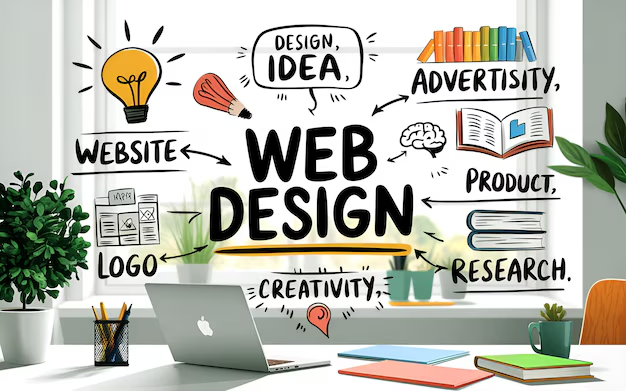
A company website often becomes the first place a potential customer forms an opinion about a business. Within a few seconds, visitors can decide whether the company appears credible, easy to work with, and relevant to their needs. Businesses that want to improve this first impression can work with a web design company in Virginia to create a website that combines useful information, clear navigation, strong visuals, and practical conversion paths.
A Website Should Make Decisions Easier
People rarely visit a business website just to admire its appearance. They arrive with a purpose. They may want to compare services, check credentials, find an address, request an estimate, or decide whether to make contact.
Good design supports those decisions. A clear homepage should communicate what the company does without forcing visitors to search through paragraphs of text. Service pages should explain offerings in plain language. Contact information should be easy to locate. Navigation should help users move between important sections without confusion.
Small design choices can affect how comfortable visitors feel. Readable fonts, sufficient spacing, descriptive headings, and logical page structures make information easier to process.
The strongest websites tend to feel simple because considerable thought has gone into organizing them.
See also: What Motorcycle Riders Should Know After an Aurora Crash
Local Businesses Need More Than Attractive Pages
A polished website is useful, but appearance alone does not bring qualified visitors through the door. Virginia businesses also need to consider how people find them through search. A website should provide enough relevant information for search engines to understand the company’s services, locations, and areas of expertise.
Local businesses can benefit from dedicated service pages and location-specific content when those pages offer genuine value. A contractor serving several communities, for example, may create useful pages explaining its services in each market rather than relying on a single generic page.
Business information should also remain consistent across the website and other online listings. Differences in names, addresses, phone numbers, or operating details can create unnecessary confusion for customers.
Mobile Design Cannot Be an Afterthought
A website that looks excellent on a large monitor can become frustrating on a smartphone. Mobile visitors need buttons that are easy to tap, text that remains readable, images that fit the screen, and menus that do not obscure important information. Forms should also be practical on smaller devices. Asking customers to complete a long form with numerous unnecessary fields can discourage inquiries.
Responsive design allows a website to adjust to different screen sizes. Testing should go beyond checking whether a page technically fits the screen. Businesses should examine how visitors actually interact with menus, forms, calls to action, images, and service information.
A comfortable mobile experience can make the difference between a visitor staying on the site and leaving after a few seconds.
Speed Influences the User Experience
Page speed affects both usability and perception. A visitor who encounters a slow page may assume the website is outdated or poorly maintained. Heavy images, excessive scripts, inefficient code, and unnecessary plugins can contribute to sluggish performance.
Businesses can improve loading times by compressing media, removing unused elements, optimizing code, and selecting suitable hosting. Image dimensions should also match their actual display size rather than forcing a browser to load unnecessarily large files.
Speed should be checked across mobile and desktop devices because performance can vary significantly between them.
Content and Design Need to Work Together
Design cannot compensate for weak information. A beautiful page with vague service descriptions leaves visitors without enough reason to take action. Conversely, useful information presented as a dense wall of text can be difficult to consume.
Effective web content uses headings, short paragraphs, lists, images, and supporting details to create a readable structure. Service pages should explain what is offered, who it is for, what customers can expect, and how to get started.
Visual elements should reinforce the message rather than distract from it. Stock photography used without purpose can feel impersonal, while original project images, team photographs, demonstrations, and relevant graphics can provide stronger context.
Build Trust Before Asking for a Sale
Visitors may not contact a company immediately. They often want evidence that the business is legitimate before taking that step.
A website can establish credibility through customer reviews, testimonials, certifications, professional affiliations, project galleries, team information, clear policies, and useful educational content.
Trust signals should be presented naturally. A testimonial placed beside a relevant service can be more persuasive than a collection of reviews buried on a separate page.
The same principle applies to company information. Customers may feel more comfortable contacting a business when they can understand who operates it, what it specializes in, and what working with the company involves.
Conversion Paths Should Feel Natural
Every important page should give visitors a sensible next action. That action depends on the business. A law firm may encourage visitors to schedule a consultation. A home service company might use a request-estimate form. A retailer may direct customers toward product categories or checkout.
Calls to action should match the visitor’s intent. Someone reading an educational article may not be ready to make a purchase, but they may want to read a related service page or request additional information.
Forms should collect only information that is genuinely necessary at that stage. Shorter forms can reduce friction, while clear labels help visitors understand what they need to provide.
At Next Level Agency, website planning can connect visual design, content organization, search visibility, and conversion goals so the site serves a practical business purpose rather than functioning as an online brochure.
Accessibility Improves the Experience for Everyone
Accessible design helps more people use a website comfortably. Color contrast should allow text to remain readable. Images should have appropriate alternative text when they communicate useful information. Videos may need captions. Keyboard navigation should work correctly, and interactive elements should provide clear visual or textual feedback.
Accessible design can also improve general usability. Clear labels, predictable navigation, readable content, and well-structured pages benefit users regardless of whether they rely on assistive technology.
Businesses should treat accessibility as part of responsible website development rather than as an optional feature added at the final stage.
Keep the Site Useful After Launch
Publishing a new website is not the end of website management. Services change. Business hours are updated. New projects become available. Staff members join or leave. Customers ask new questions. Search behavior shifts.
Regular reviews help keep the site accurate and useful. Broken links should be repaired, outdated information should be removed, and important pages should be reviewed for clarity.
Analytics can reveal which pages attract visitors and where people leave. Search performance can show which topics bring relevant traffic. Form submissions and calls can provide another perspective on whether the website is generating meaningful inquiries.
These observations can guide future improvements without requiring a complete redesign every time something changes.
A Better Website Starts With the Customer
Effective website design is less about adding visual effects and more about helping visitors find information, trust the business, and take appropriate action.
For Virginia companies, the strongest websites reflect the needs of their actual customers while supporting search visibility, mobile usability, accessibility, and measurable business objectives. Thoughtful structure today can also make future updates easier as the company grows.
Businesses ready to improve their website and create a stronger online presence can contact us today to discuss their next web design project.


 By
By